Top Auto Parking Car Lift Innovations for 2025
Auto parking car lift innovations for 2025 promise transformative benefits across industries. Hotels, offices, and shopping centers face rising parking costs, with underground garages reaching $35k-$100k per space. Advanced systems optimize space by up to 30%, cutting land costs by 60%. These solutions enhance efficiency while promoting sustainability in urban environments.
Key Takeaways
- Car lift systems for parking save money by using space better. They can cut land costs by up to 60%.
- New systems make parking easier and faster, making people happier.
- These new ideas lower CO2 emissions a lot, helping cities stay green.
Overview of Auto Parking Car Lift Innovations in 2025
Key Trends Driving Innovation
Auto parking car lift systems are evolving rapidly due to urbanization and technological advancements. Rising parking costs and limited space in cities have fueled demand for innovative solutions. Developers aim to reduce wasted time and improve efficiency. For example, drivers in the U.S. spend an average of 17 hours annually searching for parking, costing $345 per driver. In New York City, this figure rises to 107 hours and $2,243 annually. Parking revenue in the U.S. exceeds $30 billion annually, with $1.5 billion generated in major cities alone. These trends highlight the need for smarter parking systems that optimize space and reduce congestion.
The shift toward shared autonomous vehicles also drives innovation. By 2040, over 50% of total vehicle miles are projected to come from shared autonomous vehicles. Auto parking car lift systems must adapt to accommodate these changes, offering seamless integration with autonomous technologies.
| Evidence Type | Value |
|---|---|
| Annual gross parking revenue (US) | $30 billion |
| Average time spent searching (hrs) | 17 hours per year |
| Cost of wasted time per driver (US) | $345 annually |
| Time spent searching in NYC (hrs) | 107 hours per year |
| Cost of wasted time in NYC (US) | $2,243 annually |
| Revenue from parking in largest cities (US) | $1.5 billion (2016) |
| Projected shared autonomous vehicle miles by 2040 | >50% of total miles |
Benefits of Modern Systems
Modern auto parking car lift systems offer significant environmental and economic benefits. Automated Parking Systems (APS) reduce CO2 emissions by 85% or more by eliminating the need for cars to idle while searching for parking spaces. Developers can maximize parking capacity in smaller areas, reducing construction materials and excavation volume.
These systems also enhance user convenience. Drivers experience faster parking and retrieval times, minimizing frustration and wasted time. Hotels, offices, and shopping centers benefit from improved customer satisfaction and operational efficiency. By optimizing space and reducing emissions, APS contributes to sustainable urban development.
- APS reduces CO2 emissions by 85% or more.
- Developers save on construction materials and excavation costs.
- Parking capacity increases in smaller spaces.
Ningbo Blue Fuji Elevator Co., Ltd., a technical partner of Japan Fuji Elevator Co., Ltd., exemplifies innovation in this field. Their commitment to quality and customer satisfaction ensures cutting-edge solutions for diverse industries.
Auto Parking Car Lift Solutions for Hotels
Features Tailored for Hotels
Hotels often face challenges related to parking space management due to high visitor volumes and limited urban land availability. Auto parking car lift systems provide a solution by optimizing parking capacity and streamlining operations. These systems are designed to accommodate diverse vehicle types, ensuring convenience for guests driving compact cars, SUVs, or luxury vehicles.
Advanced features such as automated ticketing, license plate recognition, and real-time parking availability updates enhance the guest experience. Hotels benefit from reduced congestion in parking areas, faster vehicle retrieval times, and improved operational efficiency. Additionally, these systems integrate seamlessly with hotel management software, enabling staff to monitor parking activity and provide personalized services to guests.
Hotels that adopt auto parking car lift systems can significantly improve customer satisfaction. Efficient parking solutions reduce wait times and enhance the overall guest experience, which can lead to positive reviews and repeat business.
Examples of Leading Solutions
Several innovative auto parking car lift solutions have been developed specifically for hotels. These systems cater to the unique needs of the hospitality industry, ensuring both functionality and aesthetic appeal.
- High-Capacity Vertical Parking Systems: These systems maximize parking space by stacking vehicles vertically. Hotels in urban areas benefit from this design, which reduces the need for extensive land use.
- Automated License Plate Recognition (ANPR): ANPR technology streamlines parking operations by identifying vehicles upon entry and exit. The global ANPR system market is projected to grow from USD 3.1 billion in 2022 to USD 4.8 billion by 2027, driven by the demand for smart parking solutions in hotels and other commercial spaces.
- Integrated Payment Solutions: Automated payment systems allow guests to pay parking fees effortlessly, either through mobile apps or at kiosks. This feature enhances convenience and reduces operational costs for hotels.
- Eco-Friendly Parking Systems: Many modern solutions focus on sustainability. Automated systems reduce CO2 emissions by eliminating idling and unnecessary driving within parking areas.
Hotels adopting these solutions not only optimize their parking operations but also contribute to environmental sustainability. The commercial segment, including hotels, holds the largest market share in the automated parking system market. By implementing these systems, hotels can increase revenue through parking fees while providing a superior guest experience.
Ningbo Blue Fuji Elevator Co., Ltd., a technical partner of Japan Fuji Elevator Co., Ltd., offers cutting-edge auto parking car lift solutions tailored for hotels. Their products combine efficiency, reliability, and innovation, ensuring satisfaction for both hotel operators and guests.
Auto Parking Car Lift Solutions for Offices
Features Designed for Offices
Office environments demand parking solutions that prioritize efficiency, space optimization, and employee convenience. Auto parking car lift systems address these needs by utilizing advanced robotics and automation. These systems efficiently stack and retrieve vehicles, maximizing the use of limited parking areas. Vertically oriented designs allow for vertical stack parking, which requires significantly less space compared to traditional multi-level parking structures.
In high-density urban areas, these systems reduce the need for large, open parking lots. Fully automated systems also eliminate the need for drivers to navigate through parking facilities, reducing traffic congestion and improving overall flow. By integrating smart technologies, such as real-time parking availability updates and automated payment systems, these solutions enhance the user experience while streamlining operations for office management.
The rise of automated parking systems in office settings is largely attributed to urban traffic congestion and limited parking availability. These systems not only improve parking management but also align with environmental sustainability goals. As a result, they have become an attractive option for modern office buildings.
Examples of Leading Solutions
Several innovative auto parking car lift solutions have been developed specifically for office environments. These systems combine cutting-edge technology with practical designs to meet the unique challenges of urban office spaces.
- Robotic Parking Systems: These systems use robotics to stack and retrieve vehicles with precision. They optimize space utilization and reduce the time required for parking and retrieval.
- Vertical Parking Towers: These solutions allow for vertical stacking of vehicles, making them ideal for offices in densely populated areas. They require less land compared to traditional parking facilities.
- Smart Parking Management Systems: Integrated software solutions provide real-time updates on parking availability. This feature reduces employee frustration and saves time.
- Eco-Friendly Designs: Automated systems minimize CO2 emissions by eliminating idling and unnecessary driving within parking areas. This contributes to sustainable urban development.
The automated parking systems market is projected to grow significantly, from USD 6.49 billion in 2022 to an estimated USD 30.16 billion by 2030. This growth reflects the increasing adoption of smart technologies in urban areas, which enhance efficiency and sustainability in parking management. Offices that implement these solutions benefit from optimized space usage, reduced congestion, and improved employee satisfaction.
Ningbo Blue Fuji Elevator Co., Ltd., a technical partner of Japan Fuji Elevator Co., Ltd., offers advanced auto parking car lift solutions tailored for office environments. Their innovative designs and commitment to quality ensure efficient and reliable parking systems that meet the demands of modern workplaces.
Auto Parking Car Lift Solutions for Shopping Centers
Features Optimized for Shopping Centers
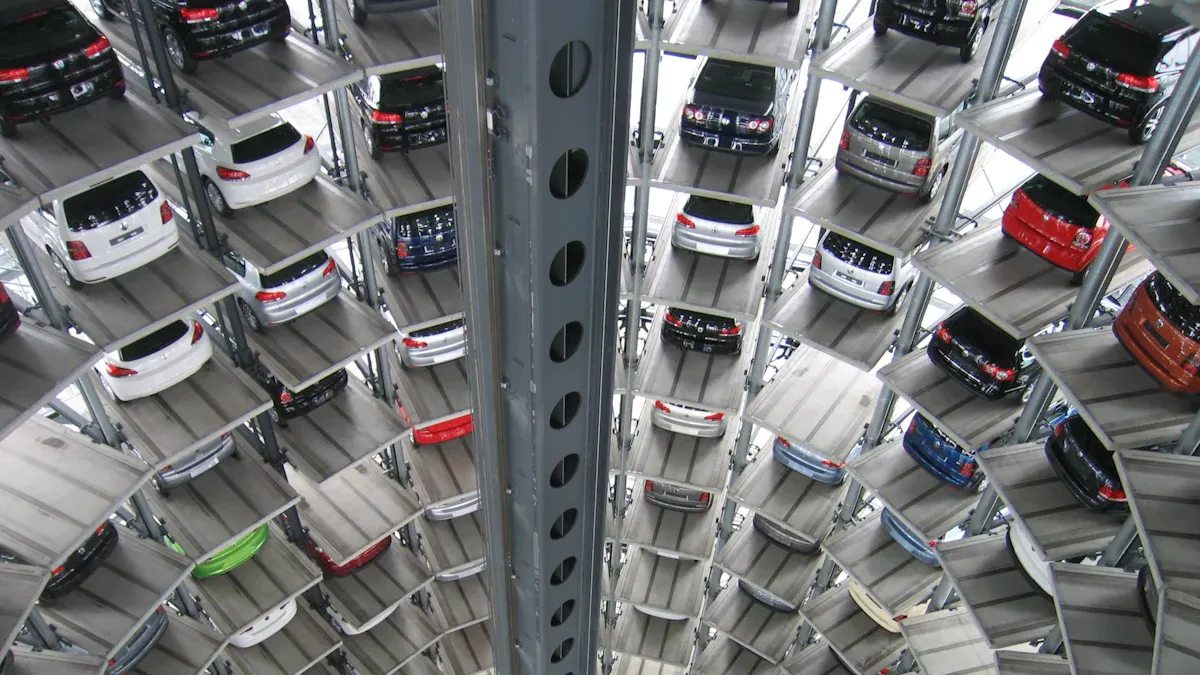
Shopping centers require parking solutions that accommodate high vehicle turnover and diverse customer needs. Auto parking car lift systems address these challenges by offering features tailored for retail environments. These systems maximize parking capacity through vertical stacking, allowing shopping centers to serve more customers without expanding their footprint.
Advanced technologies, such as real-time parking availability updates and automated ticketing, enhance the customer experience. Shoppers can quickly locate available spaces, reducing frustration and saving time. Additionally, these systems support various vehicle sizes, from compact cars to SUVs, ensuring accessibility for all visitors.
Eco-friendly designs further benefit shopping centers by reducing CO2 emissions. Automated systems eliminate unnecessary driving within parking areas, contributing to a cleaner environment. By integrating these features, shopping centers can improve operational efficiency while promoting sustainability.
Examples of Leading Solutions
Several innovative auto parking car lift solutions have been developed for shopping centers. These systems combine advanced technology with practical designs to meet the unique demands of retail environments.
| Evidence Description | Key Benefit |
|---|---|
| Car stackers allow for vertical parking, significantly increasing vehicle capacity. | Maximizes space in urban areas where parking is limited. |
| They can lift multiple vehicles simultaneously, optimizing vertical space. | Provides an efficient solution for parking in confined areas. |
| Increasing popularity of stacker parking due to space maximization. | Valuable in densely populated urban areas with severe parking shortages. |
| Cost savings from eliminating oversized garages and reducing construction costs. | Lower installation and maintenance costs, making them more affordable than other systems. |
Shopping centers adopting these solutions benefit from increased parking capacity and reduced operational costs. Vertical parking systems, for example, allow for efficient use of limited urban space. Automated payment systems streamline transactions, enhancing convenience for both customers and operators.
Ningbo Blue Fuji Elevator Co., Ltd., a technical partner of Japan Fuji Elevator Co., Ltd., offers cutting-edge auto parking car lift solutions tailored for shopping centers. Their innovative designs ensure efficiency, reliability, and customer satisfaction, making them a trusted choice for retail environments.
Comparative Analysis Across Sectors
Differences and Similarities in Requirements
Hotels, offices, and shopping centers share a common need for efficient parking solutions. However, their specific requirements differ based on operational goals and user demographics. Hotels prioritize guest convenience and seamless integration with hospitality services. Features like automated ticketing and valet-friendly systems cater to high visitor turnover. Offices, on the other hand, focus on maximizing employee satisfaction and reducing congestion during peak hours. Vertical parking towers and robotic systems align with these objectives.
Shopping centers require solutions that handle high vehicle turnover and diverse customer needs. Systems designed for retail environments often include real-time parking updates and support for various vehicle sizes. Despite these differences, all sectors benefit from space optimization, reduced emissions, and enhanced user experiences.
| Sector | Key Requirement | Common Features Across Sectors |
|---|---|---|
| Hotels | Guest convenience and valet integration | Space optimization and reduced emissions |
| Offices | Employee satisfaction and congestion control | Enhanced user experience |
| Shopping Centers | High turnover and diverse vehicle support | Real-time parking updates |
Auto parking car lift innovations for 2025 showcase remarkable advancements in efficiency, sustainability, and user experience. These systems address the distinct needs of hotels, offices, and shopping centers by optimizing space and reducing emissions. The automated parking system market, projected to grow from $2.34 billion in 2024 to $2.63 billion in 2025, highlights their increasing adoption. Features like sensor-based management and CCTV surveillance, as seen in the Advanced Automated Parking System at Veer Savarkar International Airport, demonstrate their transformative potential. Businesses should explore these solutions to enhance operations and customer satisfaction.
FAQ
What are the key benefits of auto parking car lift systems?
Auto parking car lift systems optimize space, reduce emissions, and improve efficiency. They enhance user convenience by minimizing parking time and support sustainable urban development.
How do these systems contribute to sustainability?
These systems eliminate unnecessary driving and idling, reducing CO2 emissions by up to 85%. They also minimize construction materials, promoting eco-friendly urban infrastructure.
Are auto parking car lift systems customizable for different industries?
Yes, these systems adapt to specific needs. Hotels, offices, and shopping centers benefit from tailored features like vertical stacking, real-time updates, and automated payment solutions.