Elevator Riding Tips
You rely on elevators daily, but improper use can lead to accidents. Knowing how to operate them safely protects you and others. Pay attention to proper etiquette and remain prepared for emergencies. Elevators provide convenience, but your responsible behavior ensures their safe and efficient operation.
Key Takeaways
- Let people leave the elevator before you go in. This keeps everyone safe and avoids crowding.
- Never try to open elevator doors by force. If there’s a problem, use the emergency phone to get help. Trust the elevator’s safety systems.
- Listen to safety alarms carefully. Treat every alarm like it’s serious to stay safe.
Safe Elevator Practices
Entering and Exiting Properly
Proper entry and exit from an elevator ensure safety for everyone. Always wait for passengers to exit before stepping inside. Stand clear of the doors to avoid blocking their path. When entering, step in quickly and move to the back to make room for others. If you are exiting, position yourself near the doors as the elevator approaches your floor. This minimizes delays and prevents overcrowding near the entrance.
Tip: Avoid rushing into an elevator when the doors are closing. This can trigger the safety sensors and disrupt the system.
Managing Overcrowding
Overcrowding in elevators poses safety risks. Adhere to the maximum capacity limit displayed inside the elevator. If the elevator is full, wait for the next one instead of squeezing in. Studies during the COVID-19 pandemic highlighted the importance of managing elevator capacity to maintain safety. Recommendations like cohorting and queue splitting have proven effective in reducing wait times and ensuring safe usage.
Note: Overcrowding can strain the elevator’s mechanical system, increasing the likelihood of malfunctions.
Using Buttons Correctly
Elevator buttons play a critical role in its operation. Each button corresponds to a specific floor or function. Press the button for your desired floor once and avoid pressing multiple buttons unnecessarily. If the doors need to remain open, use the “DOOR OPEN” button instead of holding the doors manually. In emergencies, use the “ALARM” or “HELP” button to alert the control system and request assistance.
Understanding how buttons work ensures efficient and safe elevator operation. For instance, pressing a button sends a signal to the control system, directing the elevator to your selected floor. Misusing buttons can lead to delays and inconvenience for other passengers.
Handling Elevator Emergencies

Power Outage Protocols
Elevator power outages can occur unexpectedly, but modern systems are designed to minimize risks. Backup power systems activate during outages, allowing the elevator to safely reach the nearest landing. Automatic braking systems prevent uncontrolled movement, ensuring passenger safety. Emergency communication devices enable you to contact building personnel or emergency services for assistance.
If you experience a power outage while inside an elevator, remain calm and avoid attempting to open the doors manually. Use the communication device to inform the control center of your situation. If you are outside the elevator and aware of someone trapped inside, notify the appropriate authorities immediately. Let the passengers know help is on the way.
Tip: When reporting an elevator failure, provide detailed information, including your name, location, the nature of the problem, and the number of people affected.
Mechanical Failure Steps
Mechanical failures in elevators require specific responses to ensure safety. Regular maintenance practices improve reliability and reduce the likelihood of malfunctions. If a mechanical issue occurs, stay inside the elevator and avoid forcing the doors open. Use the emergency communication device to report the problem. Provide details such as the elevator’s location, the number of passengers, and any injuries or urgent conditions.
Research shows that advanced monitoring systems, such as vibration analysis and deep learning-based structural health monitoring, enhance elevator performance evaluation. These systems detect damage with high accuracy, ensuring timely repairs and reducing unplanned outages.
| Framework | Description |
|---|---|
| Type | Deep Learning-based Structural Health Monitoring (SHM) |
| Application | Damage detection in elevator systems |
| Accuracy | 78.07% classification accuracy for different damage states |
Note: Adhering to maintenance protocols not only improves elevator longevity but also enhances passenger safety during emergencies.
Staying Calm and Seeking Assistance
Maintaining composure during elevator emergencies is crucial. Panic can escalate the situation and hinder effective communication. If you find yourself trapped, focus on staying calm and reassuring others. Use the emergency communication device to seek assistance and provide clear information about your location and condition.
Case studies highlight the importance of social dynamics in stressful situations. For example, Los Angeles Chargers players were trapped in an elevator for two hours. Despite rising temperatures and anxiety, they maintained composure and supported one another. Their ability to stay calm fostered a sense of cohesion and led to a positive outcome.
Reminder: Staying calm not only helps you think clearly but also reassures others, creating a safer environment for everyone involved.
Mistakes to Avoid with Elevators
Forcing Doors Open
Forcing elevator doors open is a dangerous mistake. The doors are designed to operate automatically and include safety mechanisms to prevent accidents. When you attempt to pry them open, you risk damaging the system or causing the elevator to malfunction. This action can also lead to injuries if the doors close unexpectedly.
If the doors fail to open, use the emergency communication device to report the issue. Wait for trained personnel to resolve the problem. Avoid taking matters into your own hands, as this can escalate the situation and compromise your safety.
Tip: Always trust the elevator’s built-in safety features instead of attempting manual intervention.
Ignoring Safety Alarms
Safety alarms in elevators serve as critical warnings. Ignoring them can put you and others at risk. Many people fail to recognize the importance of these alarms. Studies show that over 45% of building occupants cannot distinguish fire alarms from other alerts, such as elevator fault warnings. Additionally, less than 25% of individuals interpret fire alarms as real emergencies during evacuation drills.
To ensure safety, pay attention to all alarms and respond promptly. If you hear an alarm, remain calm and follow the building’s emergency procedures. Avoid dismissing the sound as a false alert, as this could delay necessary actions.
Reminder: Treat every alarm as a potential emergency to protect yourself and those around you.
Misusing Fire Elevators
Fire elevators are not for general use during emergencies. Using them during a fire can lead to severe consequences, including being trapped if the power fails. Instead, prioritize horizontal evacuation whenever possible. Move to a safe area on the same floor before considering vertical evacuation.
In emergencies, follow the building’s evacuation plan. Assist ambulatory individuals first and provide clear instructions to others. Avoid using elevators unless explicitly instructed by emergency personnel. This ensures a safer and more efficient evacuation process.
Note: Elevators are not a safe option during fires due to the risk of power loss and mechanical failure.
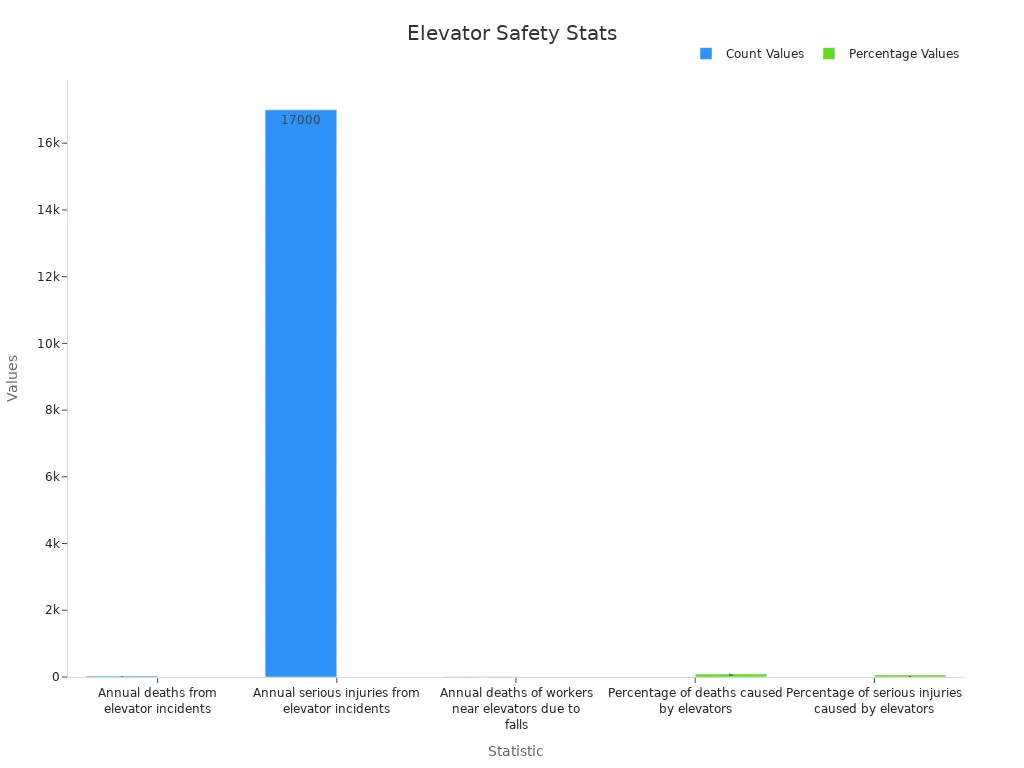
Elevators simplify daily life, but responsible usage ensures safety. Following safe practices reduces risks significantly. For example, annual statistics reveal 30 deaths and 17,000 serious injuries from elevator incidents. Most fatalities (90%) and injuries (60%) occur due to improper use.
| Statistic | Value |
|---|---|
| Annual deaths from elevator incidents | 30 |
| Annual serious injuries from elevator incidents | 17,000 |
| Percentage of deaths caused by elevators | 90% |
| Percentage of serious injuries caused by elevators | 60% |
| Annual deaths of workers near elevators due to falls | 14 |
By staying informed and prepared, you can confidently use elevators in any situation.
FAQ
What should you do if the elevator stops between floors?
Stay calm and avoid trying to exit. Use the emergency communication device to call for help. Wait for trained personnel to assist you.
Tip: Never attempt to climb out of a stuck elevator.
Can you use an elevator during a fire?
No, elevators are unsafe during fires due to power loss risks. Use stairs instead unless emergency personnel instruct otherwise.